 |
单细胞跟踪分析观察培养板,Picovitro plate,M 品牌:picovitro 型号:Microtiter form 产地:国外·瑞士 产品注册号:无 用途: 医用 招商状态:招商中 招商区域:全国 |
世联博研(北京)科技有限公司
联系时请告知消息来自360医疗器械网,您会获得更多的优惠或支持
联系人:******
联系电话:19231102955
手机号码:19231102955
电子邮箱:
访问量:50018
更多 单细胞跟踪分析观察培养板,Picovitro plate,M 产品和厂家
|
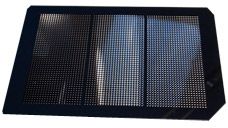
All Picovitro plates are constructed of the same three basal elements, a glass bottom plate, a silicon microgrid that make up the walls of the wells and a semipermeable membrane to avoid evaporation and facilitate gas exchange. The glass bottom and the silicon microgrid are bonded together and thereby binds chemically to each other by ion bonds which makes the joint absolutely leakage free. The choice of materials gives the Picovitro plate unique features that are important for maintenance of the cells as well as providing excellent opportunities for a wide range of methods for observation (analysis) e.g. microscopy, immune detection, fluorescence detection and PCR. In addition, all wells in the Picovitro plate have micro fabricated numbering for convenient and exact tracking of each individual cell.
The glass bottom gives the plate an excellent surface for cells to adhere to without the special treatment required for plastic. Furthermore, if the cells of interest are especially sensitive to the characteristics of the surface, the Picovitro plate is easily coated with the appropriate surface molecules. Another advantage with using glass is its optical properties that make the plate terrific for scanning and microscopy (including confocal microscopy).
Features
Several advantages are achieved by using silicon as the material for the well walls. Probably the most important one is the precision with which the array may be manufactured. This enables us to make wells small enough to be suitable for single cell culture. The wells in the standard versions of the Picovitro plates leaves plenty of room for a single cell to grow and proliferate but the manufacturing method allows to make the wells even smaller, the same size as a single cell or even a bacteria. Another advantage with silicon is that its crystal structure renders the whole plate flat so that refocusing is not necessary when using an array scanner or an automated microscopy system which is often the case with plastic microwell plates.
The semipermeable membrane is made of silicone. When applied to the plate after addition of cells it prohibits evaporation and facilitates gas exchange. It is fundamental to avoid evaporation for being able to culture cells in the small volumes of the Picovitro plate wells.
Formats
At present Picovitro provide two standard formats of the Picovitro plate, the slide format and the microtiter format. Semipermeable membranes are available for both formats. The slide format has the same outer measures as a normal microscope slide making it readily used in any standard microscopy systeminstrument. In the standard version the slide format plate has 672 wells. The microtiter format possesses the same outer measures as a 96-well microtiter plate and has 3243 wells.
Slide format
The slide format is designed to be compatible with array scanners and standard microscopes for convenient observationanalysis of the cells while in the plate.
For detailed specifications of the Picovitro plate in slide format, please contact us by mail or tel.
Microtiter format
The microtiter format is designed for high throughput applications and to be compatible with robotic systems for handling of plates.
For detailed specifications of the Picovitro plate in microtiter format, please contact us by mail or tel.
APPLICATION Single cell analysis
Real time cell analysis is a rapidly growing field in life science and clinical medicine. Increasing focus on single cell analysis is facilitated through rapid advances in imaging. microscopy and corresponding software. Picovitro addresses the growing need to study individual living cells and cell events by providing the proprietary Picovitro plate.
Some features of the Picovitro plates: Parallel clonal analysis and cultivation for several weeks Requires very low number of cells Cells can be seeded manually using standard pipettes Easy identification of each clone thanks to the miniaturized format and well ID Each clone can be treated independently Standard instruments can be used for single cell seeding and detection Applicable for both adherent and non-adherent cells Application areas
The Picovitro plate has numerous applications with tangible benefits compared to existing systems. The Picovitro plate can be applied in various fields such as molecular biology, stem and primary cell research, drug discovery, microbiology, cancer research, PCR and DNA analysis.
Molecular Biology
Molecular biology chiefly concerns itself with understanding the interactions between the various systems of a cell, including the interactions between DNA, RNA and protein biosynthesis as well as learning how these interactions are regulated. The Picovitro plate is an optimal tool for detailed analysis of cells.
PCR and DNA Analysis
Combination of cell cultivation and genetic analysis is useful in many biological applications, for example, to improve sensitivity for mutation frequency analysis of heterogeneous tumor samples. By performing all steps in the Picovitro plate the proliferation and cell morphology of every single cell or clone can be li[x]nked to its genetic information. In addition, expanded cells (i.e. the clone) give more genetic material for analysis, as compared to single cell PCR.
Primary and Stem Cells
Stem cell research is a field where there is a significant need for rapid and efficient single cell cultivation. Clonality is the heart of stem cell biology since because it is the only way to determine the true potential range and self renewal capacity of a given individual cell. Anything that undermines the credibility of clonal analysis undercuts identification and understanding of the properties of a putative stem cell. Accurate conditions for assessing clonality, number and fate of stem cells can be achieved by using the Picovitro plate.
Drug Discovery
The Picovitro plate is highly applicable when it comes to enabling improved and faster lead identification to lower cost. For example, drug sensitivity and resistance on single cell level avoids influence of heterogeneity of cell samples. The Picovitro plate has the potential to reduce the number of substances that enter late stage screening and therefore significantly reduce the cost for pharmaceutical companies involved in drug discovery.
Cancer Research
Cell heterogeneity marks a current paradigm shift in clinical diagnostics and methods are continuously being developed for the study of single cells in cancer research. Tumor heterogeneity has long been identified as a major reason for therapy failure in cancer patients. Sample heterogeneity is also one of the major reasons for pre-treatment underestimation of tumor aggressiveness. This can be minimized by detailed studies of single cell clones in the Picovitro plate.
Microbiology
The Picovitro plate facilitates the study of microorganisms, including protozoans, algae, fungi, bacteria, and viruses. Staining procedures can easily be carried out in the Picovitro plate in a rapid and high throughput manner, making the Picovitro plate and its small wells suitable for the study of microorganisms.
Instructions for use
The Picovitro plates can be loaded with cells either manually or using an automatic cell sorter.
Manual cell seeding into Picovitro plates
The cells can be manually seeded, using a standard pipette, into the Picovitro plate by random settling of the cells into each well. After cell seeding gently seal the Picovitro plate with the semipermeable membrane. For long-term single cellclone analysis, place the Picovitro plate in a standard cell culture incubator (37oC, 5% CO2).
Single cell sorting and seeding into Picovitro plates
For automatic single cell seeding into predefined wells, a cell sorter with an xy stage for plate sorting can be employed. Before following steps are performed, make sure your flow cytometer is carefully aligned and adjusted for sorting applications, including correct drop delay settings etc. Contact your instrument manufacturer for information regarding plate sorting.
Place the sterile Picovitro plate on an adsorbing material, e.g., facial tissue. Manually dispense culture medium onto the Picovitro plate (800 μl1000 micro wells). Distribute the liquid with a sterile cell scraper and remove excess liquid by scraping it over (the edge of) the Picovitro plate. Each micro well should be compartmentalized from the neighboring well, containing a fixed volume of culture medium. Place the Picovitro plate in a standard microtiter plate holder in a flow cytometer with sorting capabilities. Start the automatic single cell seeding (approx 1 wellsec). When cell seeding is performed, gently pick out the Picovitro plate and seal with the semipermeable membrane. To avoid air bubble formation, 1-2 drops of culture medium can be added on top of the Picovitro plate to facilitate sealing of the Picovitro plate with the semi-permeable membrane. For long-term single cellclone analysis, place the Picovitro plate in a standard cell culture incubator (37oC, 5% CO2). Detection
The Picovitro plate is fully compatible with standard detection methods, such as microscopy stages etc.
Fig.1
Fig.2
Please fill in your order or request for price information. The different Picovitro products are listed below along with their product number. For large orders we can provide custom design plates, please contact us for further information.
货号 简述
150-1 Slide 672, culture pack (3 x Slide 672, 3 x membrane)
250-1 Microplate 3243, culture pack (2 x Microplate 3243, 2 x membrane)
600-1 Picovitro starter pack (2 x Slide 672, 2 x membrane)
产品操作说明:The Picovitro Plate in action
The Picovitro plates are versatile platforms for single cell analysis. Click on the li[x]nk below and watch the animation of one potential use.
PLAY VIDEO(网址为:http:www.picovitro.comsitespecificpicovitrofilespicovitroandmatrix.mp4)
| 信息反馈 | |
|
* 温馨提示:请仔细阅读产品说明书或在医务、专业人员指导下购买和使用,禁忌内容或者注意事项详见说明书。

360医疗器械网
微信扫描关注
 客服热线:
客服热线: 手机版
手机版 二维码
二维码